In a fast-paced world overwhelmed by stress, trauma, and disconnection, many of us are searching
for healing that goes beyond quick fixes. At Maristan Healing, we draw inspiration from the Maristan
tradition—the world’s first holistic healing centres founded centuries ago in the Islamic world.
The Maristans were more than hospitals; they were sanctuaries of compassion, integrating physical,
mental, and spiritual care. This ancient wisdom emphasized balance, mercy, and
community—principles that are desperately needed today.
The Maristan of Granada
One famous example in Europe was the Maristan of Granada, Spain, founded in 1365 during the
Nasrid dynasty. It was particularly notable for the treatment of mental illness—centuries before
similar institutions existed elsewhere in Europe. After the end of Muslim rule in Granada (1492), the
Maristan was eventually closed and repurposed, but its legacy as one of Europe’s earliest hospitals
dedicated to psychiatric care endures.
Legacy and Influence
The Maristan tradition established not just advanced medical care for the time, but a
compassionate, holistic, and non-discriminatory ethos. Services were freely available; patients were
often given aftercare and support when discharged; and institutions were open to anyone in need.
Today, Maristans are celebrated as forerunners of the modern hospital and as models of holistic,
ethical care rooted in justice and charity
Early Maristans (Islamic hospitals) introduced innovations that transformed not just the Muslim
world’s approach to healing, but also laid the foundations for modern medical care globally. Here
are some of the key innovations and contributions:
1. Free, Universal, and Ethical Care
> Maristans treated all people, regardless of religion, gender, or social class—an
unprecedented commitment at the time. Hospitals were funded by charitable endowments
(waqf), and no patient was turned away, setting a model for universal healthcare.
> Patients stayed as long as needed, only leaving when fully recovered.
2. Comprehensive and Holistic Treatment
> Separate wards for men, women, and for different diseases: mental health, contagious
disease, surgery, eye diseases, and others.
> Early innovations in mental healthcare: dedicated psychiatric wards, and treatments
included rest, music therapy, soothing environments, and humane approaches for those
with psychological disorders—centuries before such concepts became mainstream in
Europe.
3. Organizational & Educational Models
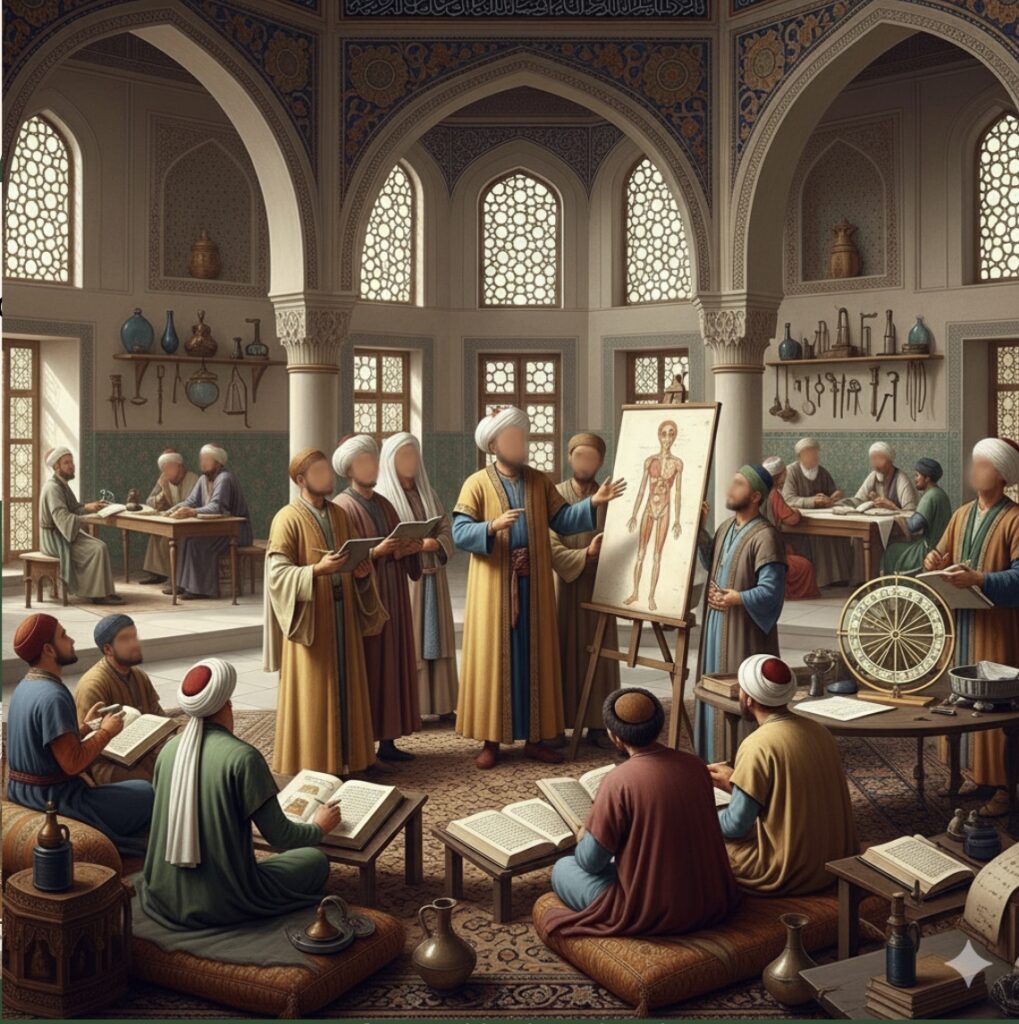
> Hospitals served as centres of medical education. They included lecture halls, libraries with
medical texts, and areas for student practical training at bedsides—making them the first
academic teaching hospitals.
> Student doctors kept written patient records, marking the origin of the medical case file
system.
4. Professional Standards
> Physicians had to pass licensing exams before practice (mandated as early as 931 CE under
Caliph Al-Muqtadir)—one of the first examples in history.
> Regular inspection and regulation ensured quality and safety in care.
5. Pharmacy & Dispensaries
> Creation of on-site dispensaries for the preparation and free distribution of medicines.
> Early practice of pharmacology with systematic documentation and experimentation with
drugs, many of which influenced European medicine.
7. Other Innovations
> Inclusion of amenities for patients’ psychological and physical comfort: recreational rooms,
live music, access to fresh food, clean baths, and gardens.
> Hospitals often provided after care services to their out patients as they were discharged,
helping them reintegrate into society.
By reviving this legacy, patient-centred, ethical, and scientifically advanced medical care we aim to
provide culturally aligned, faith-inspired care that addresses the whole person. Whether it’s trauma
recovery through EMDR, Integrative counselling, or homeopathic remedies, our approach helps you
heal in a way that honours your heritage and your unique journey.
Join us as we revive a tradition that unites soul and science, faith and healing, past and present—for
your wellbeing and your community’s flourishing.